
 EN
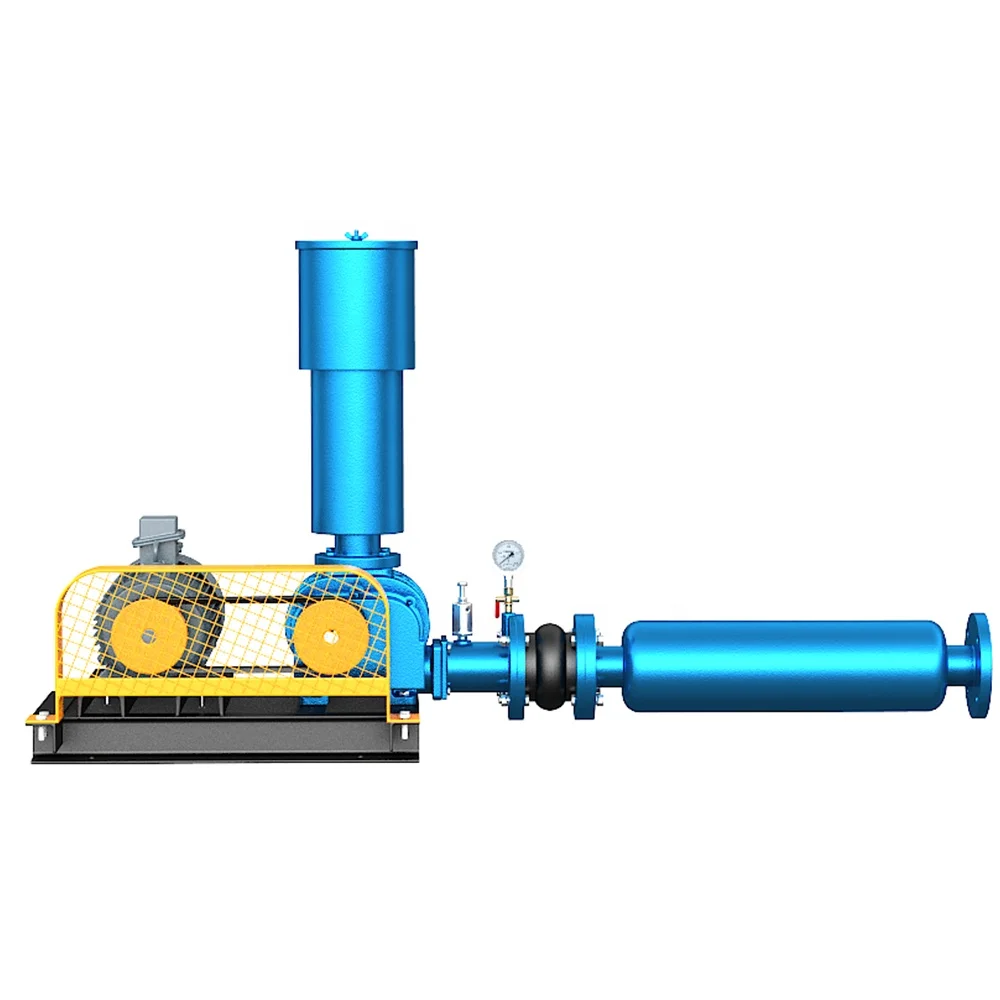
An industrial blower serves as a critical component in modern facility management, directly addressing ventilation challenges and improving air circulation across warehouses, manufacturing plants, and specialized environments. These powerful machines move large volumes of air efficiently, ensuring consistent air quality, temperature regulation, and contamination control. Understanding how an industrial blower transforms ventilation performance requires examining both the mechanical principles and practical applications that make these systems indispensable in industrial operations.

Industrial ventilation systems rely heavily on blower technology to maintain optimal air movement and environmental control. The role of a high pressure blower extends beyond simple air movement; it ensures consistent flow rates, minimizes dead zones in large spaces, and supports compliance with occupational health standards. By selecting the right industrial ventilation system with appropriate blower specifications, facilities can reduce operational costs, extend equipment lifespan, and create safer working environments for personnel.
Understanding Centrifugal Blower Applications in Modern Facilities
Core Mechanics of Centrifugal Blower Design
Centrifugal blower applications operate by drawing air into a rotating impeller that accelerates particles outward against a curved housing. This design generates consistent pressure and flow, making centrifugal blowers particularly suited for demanding industrial environments. The mechanical efficiency of this approach means centrifugal blower applications can maintain steady air delivery even when handling dust, particles, or moisture-laden air that would challenge other ventilation technologies.
The construction of centrifugal blower systems includes backward-curved or forward-curved blade designs, each optimized for specific industrial ventilation requirements. High pressure blower specifications typically range from moderate to high delivery pressures, enabling these units to overcome ductwork resistance and create forceful air movement in large spaces. This pressure capability distinguishes centrifugal blower applications from simpler axial designs, particularly in warehouse and manufacturing contexts where air must travel through extensive distribution networks.
Practical Applications Across Industries
In warehouse environments, an industrial blower equipped with centrifugal technology ensures comprehensive air circulation, preventing stagnant zones where contaminants or uneven temperatures accumulate. Manufacturing facilities depend on centrifugal blower applications to manage dust collection, coolant mist removal, and general facility air quality. Chemical processing, pharmaceutical production, and food processing industries rely on high pressure blower specifications that meet strict contamination control and air quality standards while maintaining consistent environmental conditions.
How Industrial Ventilation Systems Achieve Superior Air Circulation
Optimizing Air Distribution Through System Design
Industrial ventilation systems achieve superior air circulation by integrating properly specified blowers with engineered ductwork, intake points, and exhaust configurations. The selection of an industrial blower with appropriate high pressure blower specifications ensures that air reaches every corner of the facility without losing velocity or creating pressure imbalances. System designers calculate volumetric flow rates, static pressure requirements, and noise parameters to match the blower's performance characteristics to actual facility needs.
Stratification and dead zone elimination represent key performance metrics for industrial ventilation systems. When an industrial blower operates at optimal specifications, it creates consistent air movement that prevents hot or cold pockets from forming in large open spaces. This uniform circulation improves occupant comfort, reduces heating and cooling costs, and ensures consistent product conditions in temperature-sensitive manufacturing environments.
Pressure and Flow Coordination
High pressure blower specifications work in concert with ductwork design to overcome resistance and deliver air efficiently throughout industrial ventilation systems. Centrifugal blower applications excel at maintaining pressure even as air travels through bends, filters, and distribution branches. The relationship between pressure rise and volumetric flow determines how effectively an industrial blower can serve sprawling warehouse environments or multi-chamber manufacturing facilities without requiring excessive energy consumption or creating noise disturbances.
Performance Benefits and Operational Advantages
Energy Efficiency and Cost Reduction
Modern industrial ventilation systems featuring optimized centrifugal blower applications deliver air more efficiently than older or incorrectly sized alternatives. An industrial blower correctly matched to facility requirements operates closer to peak efficiency, reducing electricity consumption and lowering operating costs over equipment lifespan. High pressure blower specifications that align with actual static resistance requirements prevent over-sizing, which commonly wastes energy and generates unnecessary noise.
Variable frequency drive controls and smart monitoring systems enhance how industrial blowers respond to changing facility demands. Centrifugal blower applications equipped with modern controls automatically adjust speed and pressure, maintaining performance while consuming only necessary power. This adaptive approach reduces utility expenses significantly compared to constant-speed operation, particularly in facilities with fluctuating occupancy, seasonal variations, or production schedule changes.
Environmental Control and Worker Safety
Industrial ventilation systems powered by quality blower equipment maintain air quality standards essential for worker health and regulatory compliance. Centrifugal blower applications effectively remove airborne particles, chemical fumes, and moisture that accumulate during manufacturing processes. High pressure blower specifications capable of handling filter resistance ensure continuous clean air delivery even as filters accumulate dust, protecting workers from exposure to occupational hazards.
Temperature consistency throughout industrial facilities prevents thermal discomfort and maintains optimal conditions for sensitive processes or stored materials. An industrial blower that moves air effectively creates more uniform temperature distribution, reducing localized heat buildup near equipment or cold drafts near exterior walls. This comprehensive climate control extends product shelf life, improves equipment reliability, and demonstrates management commitment to worker welfare and operational excellence.
FAQ
What makes centrifugal blower applications superior to axial designs?
Centrifugal blower applications generate significantly higher pressure capabilities, making them ideal for overcoming ductwork resistance and creating forceful air circulation in large industrial spaces. Axial designs excel at moving large air volumes with minimal pressure rise, while centrifugal designs prioritize pressure generation. For industrial ventilation systems requiring extended ductwork, complex routing, or high filtration resistance, centrifugal technology delivers consistent performance that axial alternatives cannot match. The curved impeller design of centrifugal units also handles particulate-laden air more effectively, reducing maintenance frequency in dusty environments.
How do high pressure blower specifications impact overall system performance?
High pressure blower specifications determine whether an industrial blower can overcome system resistance and maintain adequate air delivery at distribution endpoints. Higher pressure ratings enable installation of extended ductwork, additional filters, and complex distribution networks without significant velocity loss. Matching high pressure blower specifications to actual system requirements prevents both under-sizing, which causes inadequate circulation, and over-sizing, which wastes energy and creates noise. Proper specification ensures that industrial ventilation systems perform reliably throughout their design life without requiring oversized, inefficient equipment.
Can an industrial blower be retrofitted into existing ventilation systems?
Many existing industrial ventilation systems can accommodate industrial blower upgrades, provided the replacement unit matches mounting dimensions and electrical requirements while delivering required performance specifications. Retrofitting an industrial blower with improved centrifugal technology often requires evaluation of existing ductwork to confirm compatibility with new pressure and flow characteristics. High pressure blower specifications must be compared against actual system static pressure to avoid mismatch conditions. Professional assessment ensures that upgraded centrifugal blower applications integrate seamlessly, improving air circulation effectiveness without requiring extensive system redesign or reconstruction.