
 EN
EN
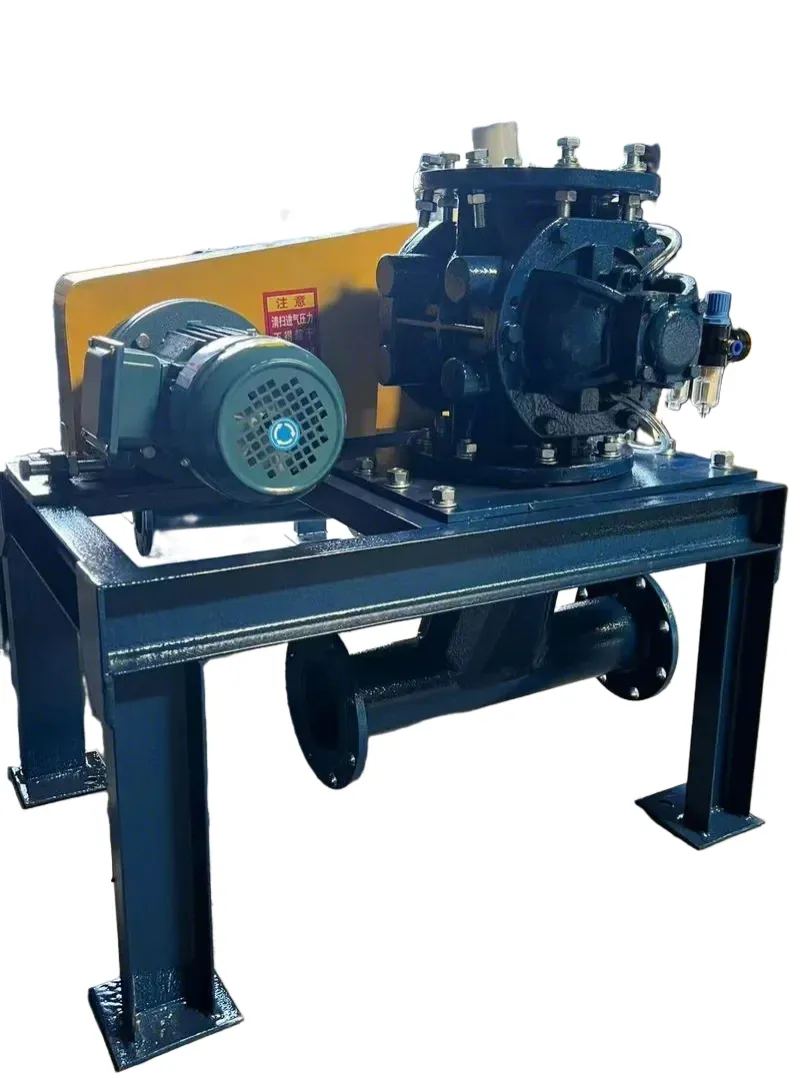
Continuous material feeding is the backbone of efficient industrial operations, and selecting the right equipment directly impacts productivity and cost management. An industrial rotary feeder has emerged as a trusted solution across manufacturing, food processing, pharmaceutical, and chemical industries. These devices provide consistent, controlled material discharge that minimizes interruptions and maintains steady production flow. Understanding why this equipment type delivers reliability requires examining its mechanical design, operational advantages, and suitability for demanding industrial environments.
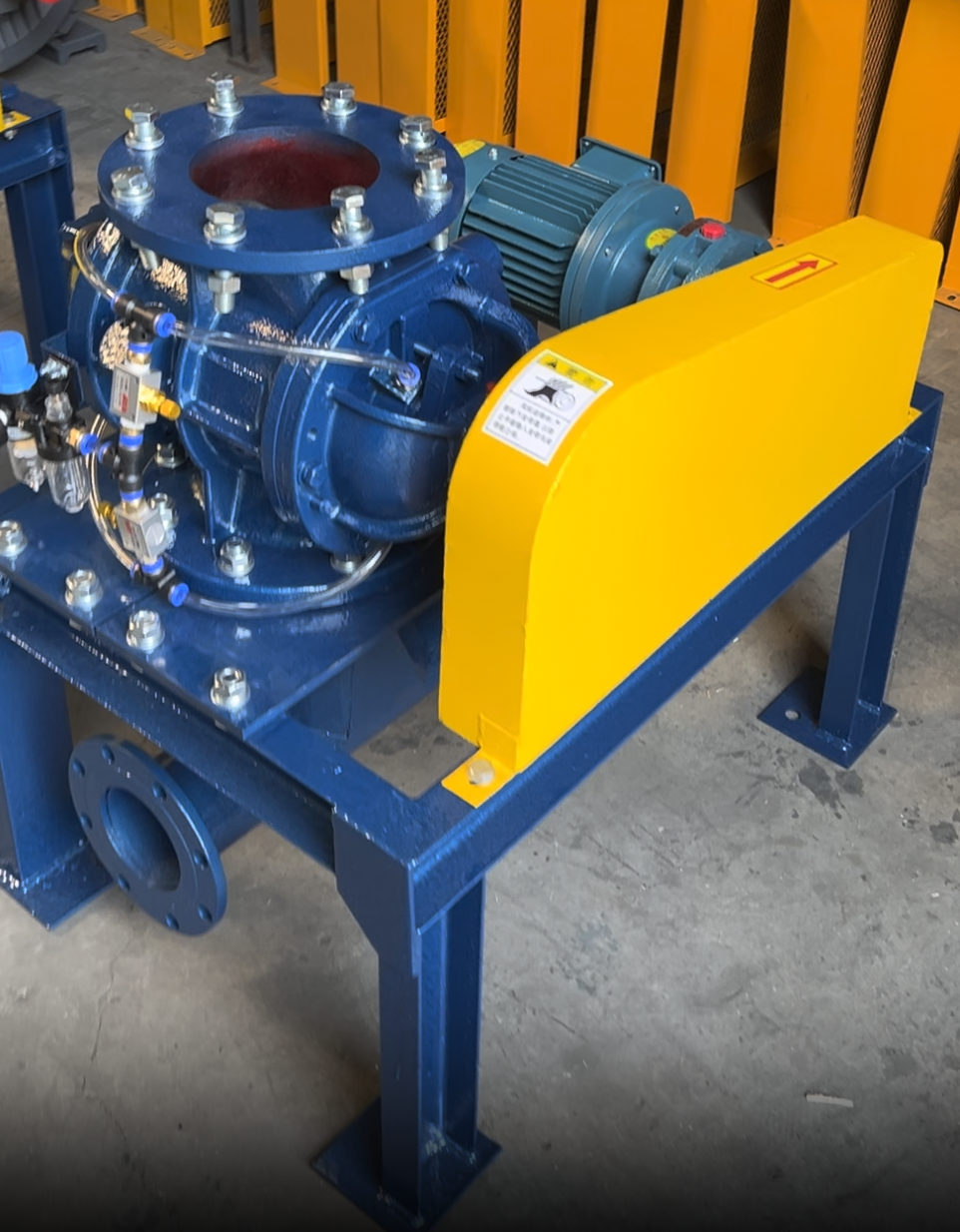
Reliability in bulk material handling systems depends on equipment that can maintain consistent output without excessive wear, contamination risk, or frequent maintenance interruptions. An industrial rotary feeder achieves this through precise engineering and intuitive operational principles. The rotating vane or blade design creates a positive displacement mechanism that meters material with high accuracy while preventing material backflow and segregation. This fundamental advantage makes industrial rotary feeders particularly valuable in applications where feed rate consistency and product integrity matter.
Mechanical Reliability and Design Advantages
Positive Displacement Principle
The core strength of an industrial rotary feeder lies in its positive displacement design. Unlike gravity-feed or vibrating systems that depend on external forces and material properties, rotary feeders actively push material forward through sealed chambers. Each rotating element moves a fixed volume of material with every revolution, creating predictable discharge rates independent of material moisture content, density variations, or angle of repose. This mechanical certainty reduces process variability and minimizes the need for downstream flow compensation equipment.
Sealed Chamber Architecture
Sealed chamber construction within an industrial rotary feeder prevents material escape, dust emission, and environmental contamination. The tight tolerances between rotating and stationary components create minimal gaps, allowing controlled material movement without spillage. This design integrates naturally into pneumatic conveying systems and forms the interface between storage hoppers and screw conveyor feeders downstream. The seal integrity also protects product quality by preventing foreign material ingress and reducing oxidation exposure during the feeding stage.
Operational Consistency in Bulk Material Handling
Feed Rate Stability Across Material Types
An industrial rotary feeder maintains consistent feed rates regardless of material cohesion, moisture, or temperature fluctuation. This capability becomes critical when handling hygroscopic powders, sticky biomaterials, or temperature-sensitive chemicals. The mechanical action of the rotary mechanism doesn't rely on material flowing freely; instead, it grips and transports material whether the feed hopper contains loose particles or slightly agglomerated batches. Process engineers can set and trust discharge rates without continuous adjustment, a significant advantage over gravity systems that require periodic calibration or vibratory enhancement.
Integration with Rotary Airlock Valves
Modern bulk material handling systems often pair an industrial rotary feeder with rotary airlock valves to achieve seamless material transfer between system stages. A rotary airlock valve prevents air backflow in pneumatic conveying lines while maintaining precise metering at discharge points. When combined with an industrial rotary feeder, this pairing creates a robust, dual-positive-displacement system that handles pressure differentials, variable air volumes, and load fluctuations without compromising feed continuity. The synergy between these components enhances overall system reliability and reduces unplanned downtime.
Durability and Maintenance Advantages
Extended Component Life Through Controlled Wear
Controlled material contact and uniform stress distribution extend the operating life of an industrial rotary feeder far beyond simpler feeding alternatives. The sealed design minimizes abrasive dust exposure on bearing surfaces and seals. Rotating elements experience consistent, predictable loading rather than shock forces generated by impact feeders or vibrating systems. Wear patterns become measurable and predictable, enabling planned maintenance scheduling rather than emergency repairs. This predictability allows facility managers to order replacement components in advance and schedule maintenance during planned shutdowns, reducing unscheduled production loss.
Simplified Troubleshooting and Support
The straightforward mechanical architecture of an industrial rotary feeder simplifies diagnosis of performance issues. Operators and maintenance technicians quickly identify whether reduced flow results from product bridging upstream, worn rotor elements, seal degradation, or motor power loss. This clarity accelerates problem resolution compared to complex pneumatic systems where root cause analysis requires extensive instrumentation. Parts commonality across installations and standardized replacement procedures make spare inventory management efficient and cost-effective. Documentation and troubleshooting resources for industrial rotary feeders are well-established across industries, supporting faster problem-solving.
Application Suitability and Market Adoption
Proven Performance Across Diverse Industries
Industrial rotary feeders perform reliably in cement plants, mineral processing facilities, chemical production sites, food manufacturing plants, and pharmaceutical operations. Each sector demands distinct performance characteristics, yet the rotary feeder design adapts effectively through material selection, size scaling, and operational speed adjustment. Long-term market adoption across these diverse applications reflects genuine reliability proven through thousands of installations. When multiple independent industries standardize on the same equipment type, it signals genuine engineering robustness rather than marketing advantage.
Complementary Role in Material Conveying Systems
An industrial rotary feeder functions most effectively when integrated into screw conveyor feeders and broader bulk material handling systems rather than operating in isolation. The precise metering provided by a rotary feeder prevents screw conveyor starvation and ensures consistent screw loading, which extends screw component life and maintains steady conveying velocity. This systems approach to material handling improves overall plant efficiency while distributing reliability responsibilities across complementary equipment. Designers selecting an industrial rotary feeder understand that compatibility and integration excellence matter as much as the feeder's standalone performance.
FAQ
What distinguishes an industrial rotary feeder from other bulk material handling systems?
An industrial rotary feeder uses positive displacement through sealed rotating chambers to meter material with mechanical certainty, unlike gravity feeders or vibratory systems that depend on material properties. This design eliminates output fluctuations caused by moisture, density variation, or temperature change, making rotary feeders superior for applications requiring consistent feed rates and minimal process variability across extended production runs.
How does a rotary airlock valve work alongside an industrial rotary feeder in pneumatic systems?
A rotary airlock valve prevents reverse air flow at discharge points while metering material transfer, functioning as a secondary positive displacement device. When paired with an industrial rotary feeder at the hopper source, the combination creates a dual-positive-displacement interface that maintains feed control through pressure swings and variable conveying conditions, dramatically improving system reliability and discharge consistency.
Can an industrial rotary feeder handle sticky or cohesive materials?
Yes, an industrial rotary feeder actively grips and transports material rather than relying on gravitational flow, making it effective for sticky, hygroscopic, or slightly agglomerated bulk materials. This mechanical action prevents material bridging and provides steady feed rates regardless of product cohesion, whereas screw conveyor feeders alone would experience variable output or require supplemental equipment for problematic materials.