
 EN
EN
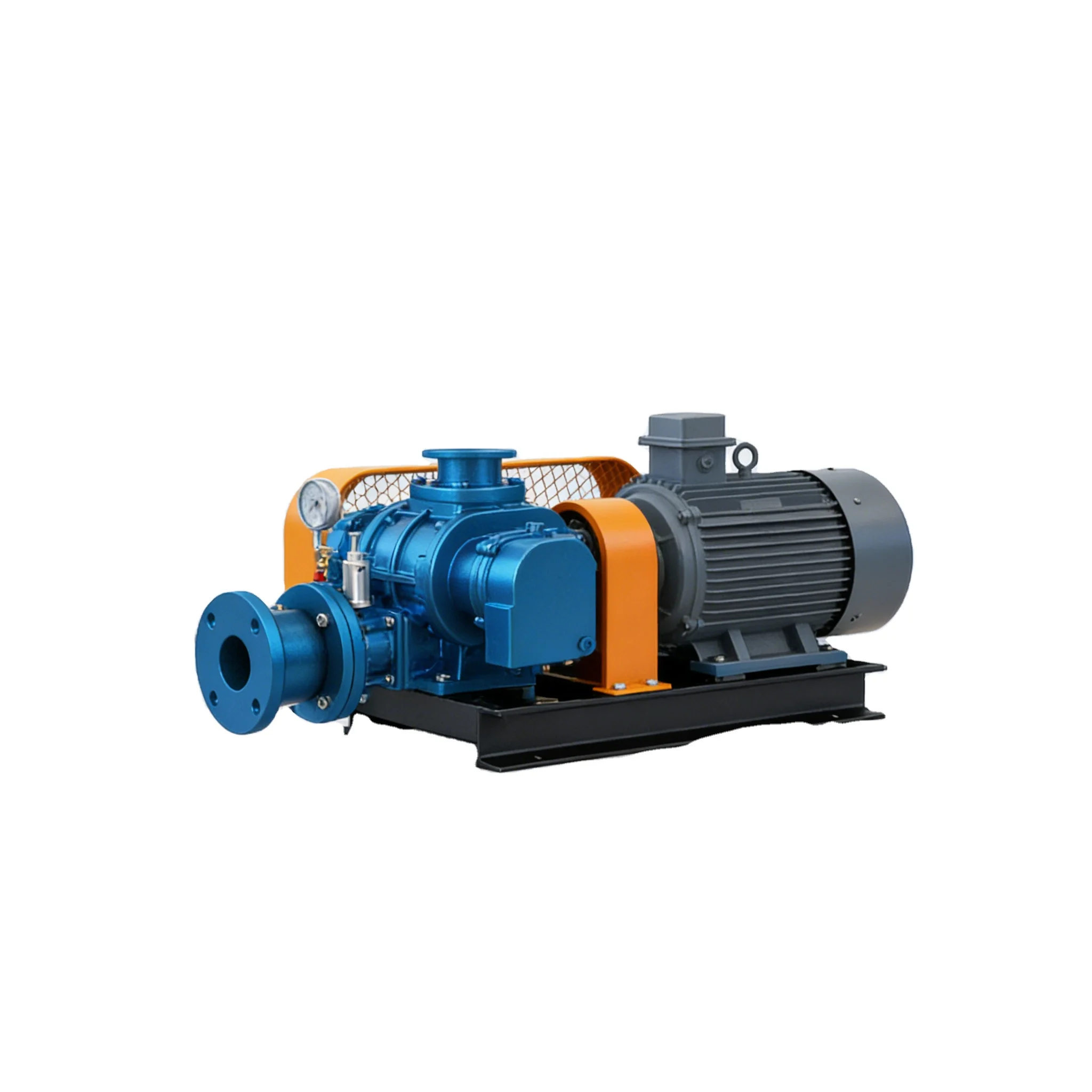
Industrial facilities face constant pressure to optimize operational efficiency while managing maintenance costs and minimizing downtime. A rotary lobe blower represents a strategic investment that addresses these challenges directly. Unlike many equipment choices that require complex trade-offs, this technology delivers measurable returns through reliability, predictable maintenance cycles, and adaptability to diverse industrial applications.
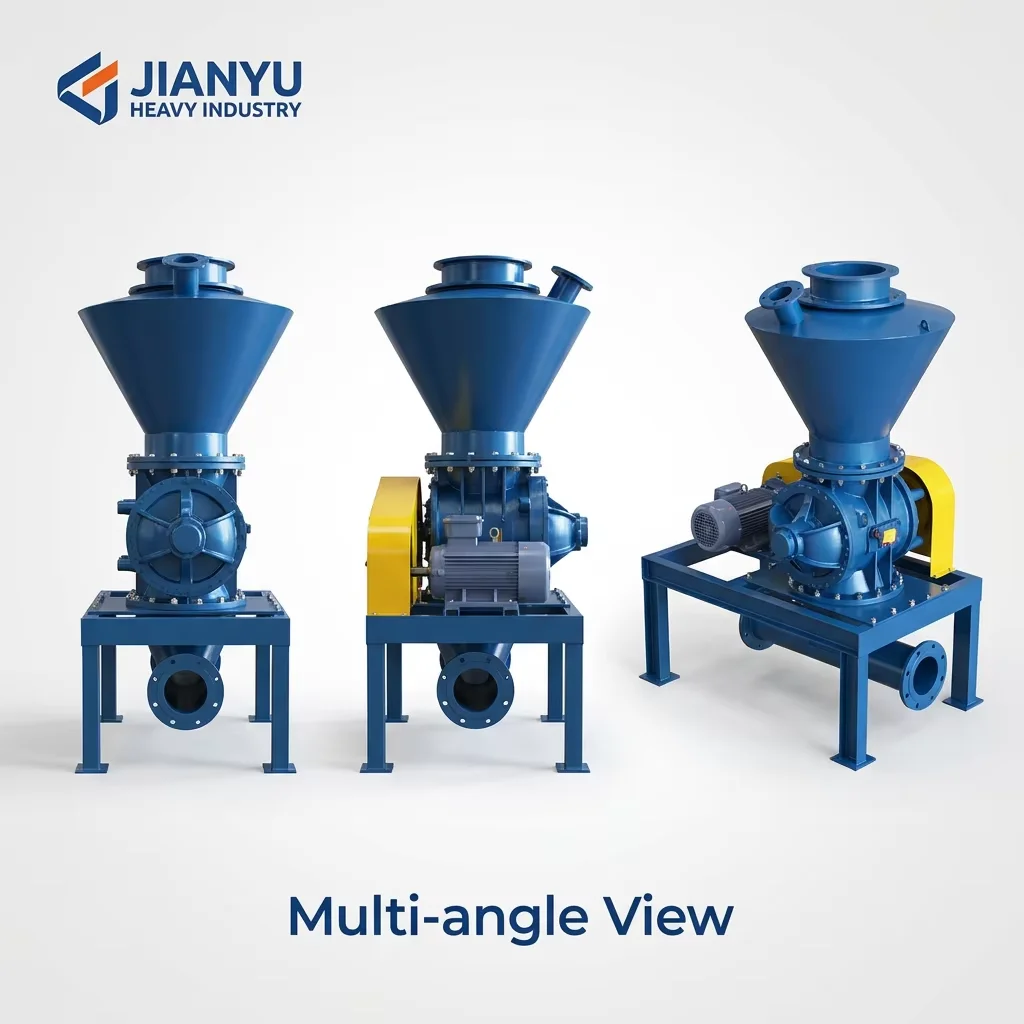
The investment case for rotary lobe blower equipment extends beyond initial purchase price. These systems operate with consistent performance over extended periods, reduce energy waste through mechanical efficiency, and integrate seamlessly into retrofit or new facility designs. Understanding why this technology makes financial and operational sense requires examining its core advantages, maintenance profile, and how it compares to alternative solutions in real-world industrial scenarios.
Understanding Positive Displacement Blower Applications
Core Operating Principle and Industrial Relevance
Positive displacement blower applications rely on a fundamental mechanical principle: moving fixed volumes of air or gas with each shaft rotation. This principle distinguishes positive displacement blowers from centrifugal alternatives, which accelerate fluid through impeller speed rather than mechanical displacement. Industrial facilities benefit from this approach because it guarantees consistent flow output regardless of downstream pressure variations, making positive displacement blower applications ideal for pneumatic conveying, wastewater treatment, and vacuum operations.
The rotary lobe design excels in situations demanding predictable performance under variable load conditions. Whether managing packed-bed aeration, transferring bulk materials, or generating vacuum for industrial processes, positive displacement blower applications deliver reliable capacity. Facilities choosing this approach gain the advantage of knowing exactly what airflow will be available at any given operating point, eliminating surprises during peak demand periods or when material properties shift seasonally.
Industry-Specific Applications and Value Drivers
Wastewater treatment plants rely heavily on positive displacement blower applications for fine-bubble aeration systems. The consistent flow ensures efficient oxygen transfer and stable process control. Food processing facilities use this technology for pneumatic conveying of powders and granulated materials without contamination risk. Pharmaceutical manufacturing benefits from the reliable, repeatable displacement volumes needed for containment and process consistency.
Rotary Lobe Blower Maintenance Troubleshooting Essentials
Preventive Maintenance Framework and Cost Impact
Rotary lobe blower maintenance troubleshooting begins with understanding that these systems are designed for accessibility and straightforward service intervals. Unlike centrifugal units requiring specialized bearing alignment tools or complex balancing procedures, rotary lobe blower maintenance troubleshooting focuses on manageable tasks: timing gear inspection, lobe clearance verification, oil change schedules, and inlet filter replacement. This simplicity translates directly to lower maintenance labor costs and faster repair cycles, reducing facility downtime.
Effective rotary lobe blower maintenance troubleshooting prevents 80 percent of field failures before they occur. Regular bearing temperature monitoring, routine oil analysis, and seasonal inlet valve inspection catch problems during scheduled maintenance windows rather than forcing emergency shutdowns. Facilities that implement structured preventive protocols report maintenance costs running 15 to 25 percent below industry averages, while experiencing unplanned downtime events almost half as frequently as those using reactive repair approaches.
Common Issues and Diagnostic Resolution
Rising discharge temperature often signals inlet filter blockage or insufficient cooling. Rotary lobe blower maintenance troubleshooting for this condition starts with checking filter differential pressure and cleaning or replacing the inlet element. Abnormal noise typically indicates internal lobe clearance drift or bearing wear, both detectable through vibration analysis before catastrophic failure. Capacity loss under steady operating conditions usually traces to worn inlet valve components or timing gear slippage, requiring scheduled component replacement during planned shutdowns.
Most rotary lobe blower maintenance troubleshooting issues respond to systematic diagnosis rather than random parts replacement. Establishing baseline performance data during commissioning enables rapid identification when performance deviates. Discharge pressure trends, current draw patterns, and vibration signatures create a diagnostic baseline that facility maintenance teams use to schedule interventions precisely. This data-driven approach minimizes equipment downtime while reducing unnecessary component replacement.
Rotary Lobe Blower vs Centrifugal Comparison Analysis
Performance Characteristics and Operating Conditions
The rotary lobe blower vs centrifugal comparison reveals fundamental differences in how each technology delivers airflow and pressure. Rotary lobe designs operate across a wide pressure range with constant displacement per revolution, while centrifugal units require specific speed ranges to achieve peak efficiency. In low-pressure applications below 10 kilopascals, rotary lobe equipment maintains steady performance. Centrifugal alternatives experience efficiency drops and potential surge conditions at these same pressures. When applications demand consistent flow across variable loads or require maximum efficiency at partial capacities, rotary lobe blower vs centrifugal analysis shows the positive displacement approach delivers superior results.
Flow capacity remains the second critical dimension in any rotary lobe blower vs centrifugal comparison. Centrifugal units excel at moving massive volumes under high-speed operation, reaching 500 cubic meters per minute and beyond. Rotary lobe designs typically peak at 150 to 300 cubic meters per minute but maintain consistent displacement regardless of pressure. Facilities handling moderate flow requirements with variable downstream conditions find rotary lobe performance more predictable. Those requiring massive volumes under stable high-pressure conditions may favor centrifugal technology despite its operational complexity.
Cost and Operational Trade-Offs
Capital investment differs significantly in any rotary lobe blower vs centrifugal comparison. Rotary lobe equipment typically costs 20 to 30 percent less than equivalent centrifugal systems when comparing installed solutions. Operating costs tell a more nuanced story. Centrifugal units operate with higher overall efficiency ratings, sometimes reaching 85 percent or better under optimized conditions. Rotary lobe blowers typically achieve 75 to 82 percent efficiency but maintain this performance across broader operating ranges. Over facility lifespans spanning 15 to 20 years, the total cost comparison depends heavily on actual duty cycles and load profiles.
Maintenance complexity becomes decisive in long-term cost analysis. Rotary lobe blower vs centrifugal comparison for maintenance reveals that positive displacement designs require fewer specialized skills, simpler tooling, and shorter service intervals. Centrifugal equipment demands precision balancing, specialized bearing maintenance, and sometimes seal replacements requiring supplier involvement. Facilities valuing operational self-sufficiency and predictable maintenance budgets typically find rotary lobe equipment delivers superior value despite potentially higher energy consumption in specific scenarios.
Strategic Investment Decision Framework
Return on Investment and Financial Justification
Evaluating rotary lobe blower investment requires examining total cost of ownership across the equipment lifecycle. Initial purchase price represents only 15 to 20 percent of total spending over 20 years. Energy consumption, maintenance labor, spare parts, and unplanned downtime costs comprise the remaining 80 to 85 percent. Because positive displacement blower applications deliver consistent performance with manageable maintenance, the total cost picture often favors rotary lobe investment over alternatives that promise higher efficiency but deliver unpredictable service costs.
Facilities conducting rigorous investment analysis compare energy costs against maintenance and downtime risks systematically. A rotary lobe blower installation consuming slightly more kilowatts than a centrifugal alternative might deliver superior total value if it eliminates one unplanned shutdown annually. That single avoided shutdown could cost $5,000 to $50,000 depending on facility type. The energy cost premium of $1,000 to $3,000 annually becomes negligible by comparison. This financial reality explains why experienced facility managers choose rotary lobe technology despite published efficiency ratings favoring centrifugal alternatives.
FAQ
How long does a typical rotary lobe blower last before major rebuilds?
Well-maintained rotary lobe blower equipment typically operates 8 to 12 years before major component replacement becomes necessary. Facilities implementing preventive maintenance protocols see equipment lasting toward the upper end of this range. Standard component rebuilds during this period include bearing replacement, lobe resurfacing if wear exceeds limits, and seal replacement. The mechanical simplicity of rotary lobe designs enables cost-effective rebuilds extending equipment life another 8 to 10 years, making 15 to 20 year total operating life achievable under good maintenance practices.
What size rotary lobe blower should a facility specify?
Proper rotary lobe blower sizing depends on three factors: required airflow volume, system pressure requirements, and duty cycle profile. Facilities should calculate peak flow demand and add 10 to 15 percent capacity margin for process variations and future growth. System pressure determines whether a single-stage or two-stage lobe design is necessary. Duty cycle analysis reveals whether continuous, intermittent, or seasonal operation suits the available equipment options. Oversizing by 50 percent wastes capital and operating energy; undersizing causes insufficient performance and accelerated wear. Professional sizing analysis ensures optimal positive displacement blower applications for specific facility needs.
Can a rotary lobe blower replace an existing centrifugal system?
Retrofit viability depends on whether the centrifugal unit's operating point falls within the rotary lobe blower's acceptable performance range. If existing applications demand steady, predictable flow rather than maximum volume at high pressure, retrofit is typically feasible. Facility engineers should verify system pressure requirements stay below 100 kilopascals absolute and flow volumes match rotary lobe blower capacity ratings. Piping modifications may be minimal if discharge ports align reasonably. The rotary lobe blower vs centrifugal comparison for retrofit situations often favors the switch because positive displacement blower applications in moderate-pressure scenarios deliver superior reliability with lower ownership costs than outdated centrifugal equipment.