
 EN
EN
Engineering projects across diverse industries consistently select a lobe roots blower for air supply systems because of their proven reliability, consistent performance, and cost-effectiveness in demanding applications. These rotary machines have become the backbone of numerous industrial processes, from wastewater treatment to food processing, pneumatic conveying, and chemical manufacturing. Understanding why engineers favor this technology reveals critical insights into system design decisions and long-term operational success.
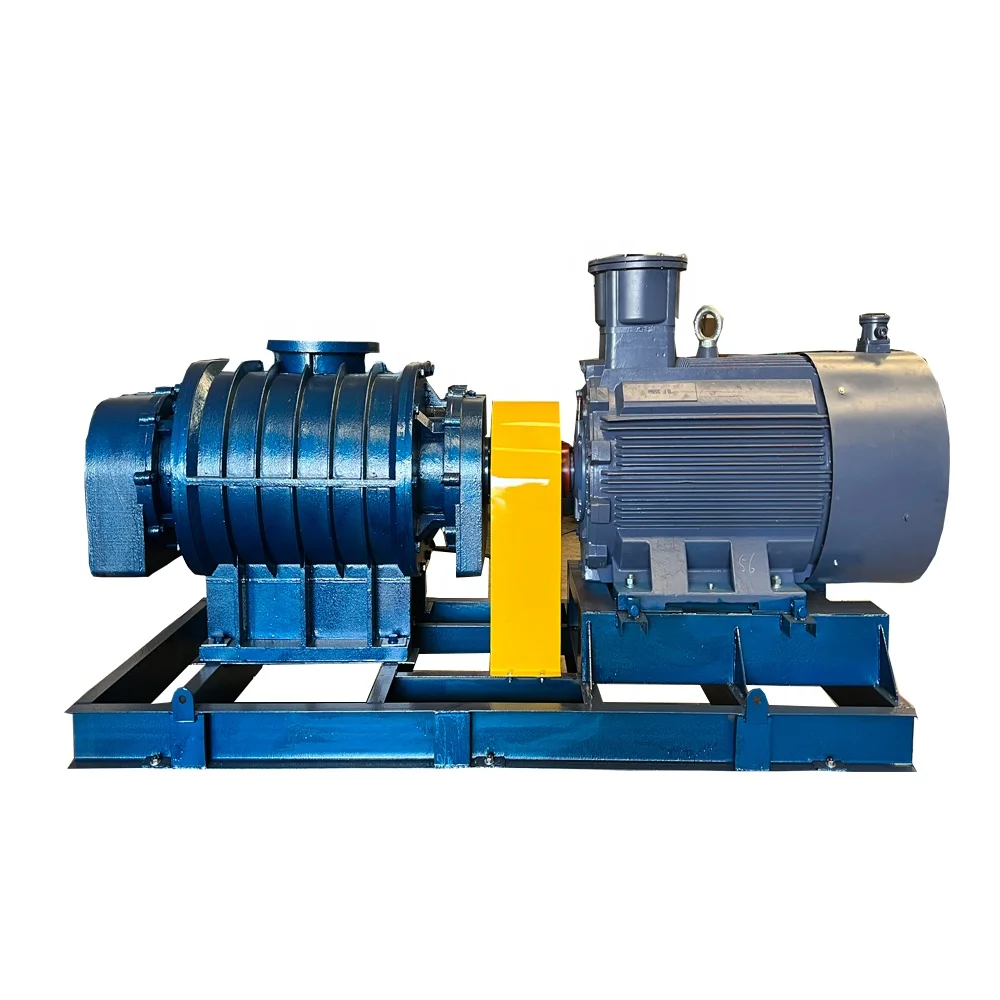
The selection of positive displacement blower applications in critical infrastructure projects hinges on several fundamental engineering advantages. Unlike centrifugal blowers that rely on velocity, rotary lobe compressor specifications emphasize constant volume displacement, delivering precise airflow regardless of system pressure fluctuations. This predictable performance makes industrial air handling equipment choices straightforward for engineers designing systems where reliability cannot be compromised.
Operational Reliability and Consistent Performance
Why Displacement Consistency Matters
Positive displacement blower applications excel because they move a fixed volume of air with each rotation. This characteristic means a lobe roots blower maintains output consistency even when downstream pressure increases unexpectedly. In contrast, centrifugal units experience reduced flow under high-back-pressure conditions, making them unsuitable for processes requiring guaranteed minimum airflow. Engineers value this predictability because it eliminates system surprises and reduces the need for oversizing equipment to compensate for performance variability.
Durability in Harsh Industrial Environments
Rotary lobe compressor specifications emphasize robust construction designed to withstand continuous operation in challenging conditions. Industrial air handling equipment in pulp mills, steel plants, and chemical facilities must tolerate dust, moisture, temperature extremes, and chemical exposure. The simple, proven design of a lobe roots blower means fewer complex components that could fail under stress. Positive displacement blower applications benefit from this mechanical simplicity because fewer failure points translate to higher uptime and lower maintenance intensity.
Cost Efficiency and Total Economic Value
Initial Capital and Installation Advantages
Engineers often select rotary lobe compressor specifications because capital costs remain substantially lower than equivalent variable frequency drive centrifugal systems. A lobe roots blower requires minimal foundation modifications and straightforward piping connections, reducing installation expenses. Positive displacement blower applications also avoid the complex controls and soft-start systems that increase costs for other technologies. This economic advantage extends beyond purchase price into commissioning speed, allowing projects to reach operational status faster and begin generating return on investment sooner.
Operating Cost Transparency
Industrial air handling equipment selections favor the lobe roots blower because energy consumption remains predictable and scalable with demand. Power requirements grow proportionally with pressure and flow, making energy budgeting straightforward for facility planners. Positive displacement blower applications eliminate surprise efficiency losses that plague centrifugal units at partial load operation. Engineers designing long-term systems appreciate this transparency because it enables accurate lifecycle cost modeling and justifies the technology choice to financial stakeholders who evaluate operating expense projections.
Application Versatility and System Integration
Adaptability Across Industrial Sectors
A lobe roots blower proves effective across wastewater treatment, food production, pneumatic conveying, and numerous other sectors because rotary lobe compressor specifications accommodate diverse pressure and flow combinations. Positive displacement blower applications range from gentle 2–5 psig processes in aeration systems to higher-pressure 10–15 psig requirements in material handling. This flexibility means engineers can standardize on one technology platform across multiple facility systems, simplifying spare parts inventory, operator training, and maintenance procedures. The versatility of industrial air handling equipment built on this principle reduces complexity in large integrated operations.
Process Control and System Responsiveness
Engineering projects choose a lobe roots blower because these units respond instantly to flow demand changes without the pressure spikes or surging characteristic of centrifugal machinery. When downstream processes require sudden airflow increases, positive displacement blower applications deliver that volume immediately. Rotary lobe compressor specifications support installation of simple check valves and anti-surge protection, which are far less expensive than sophisticated control systems required by competing technologies. This simplicity improves system reliability while reducing engineering complexity and design documentation overhead.
FAQ
What distinguishes a lobe roots blower from other positive displacement equipment?
A lobe roots blower uses two counter-rotating lobes that trap and move air from inlet to discharge, delivering consistent volume per rotation. Unlike screw compressors that use helical rotors for compression, rotary lobe compressor specifications employ simple external gears for timing. Positive displacement blower applications using this design eliminate compression chambers, making the lobe roots blower simpler, quieter, and less prone to internal contact wear than screw alternatives.
How do engineers determine if a lobe roots blower suits their specific application?
Rotary lobe compressor specifications require evaluation of required flow rate, operating pressure range, and duty cycle. Industrial air handling equipment selection begins by confirming whether pressure needs fall within 2–15 psig, where positive displacement blower applications perform optimally. Engineers also assess whether airflow must remain constant across varying downstream pressures, a key advantage of the lobe roots blower technology over centrifugal alternatives.
What maintenance practices extend lobe roots blower service life?
Positive displacement blower applications require regular oil changes, filter element replacement, and temperature monitoring to maintain rotary lobe compressor specifications performance. A lobe roots blower benefits from alignment checks and bearing inspection during annual service intervals. Industrial air handling equipment operates reliably for 50,000 hours or more when maintenance schedules are followed, making planned preventive maintenance far less expensive than emergency repairs.