
 EN
EN
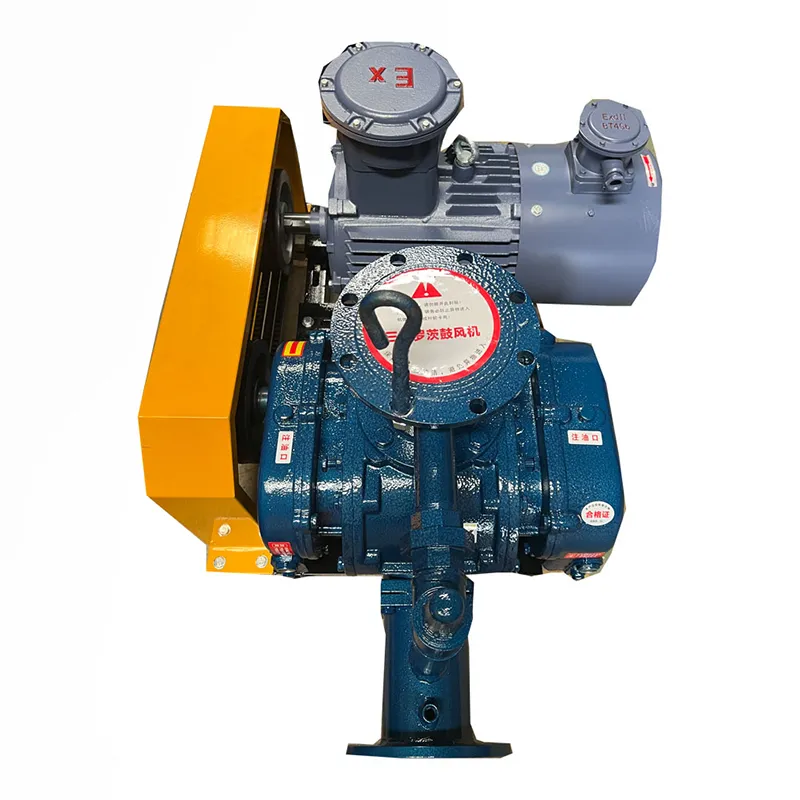
A roots blower stands as one of the most reliable choices for large scale industrial projects requiring consistent, high-volume air movement and pressure control. Unlike centrifugal alternatives, a roots blower operates on positive displacement principles, meaning it moves a fixed volume of air with each rotation regardless of pressure conditions. This fundamental advantage makes roots blowers exceptionally suited to demanding environments where reliability, efficiency, and predictable performance are non-negotiable requirements.
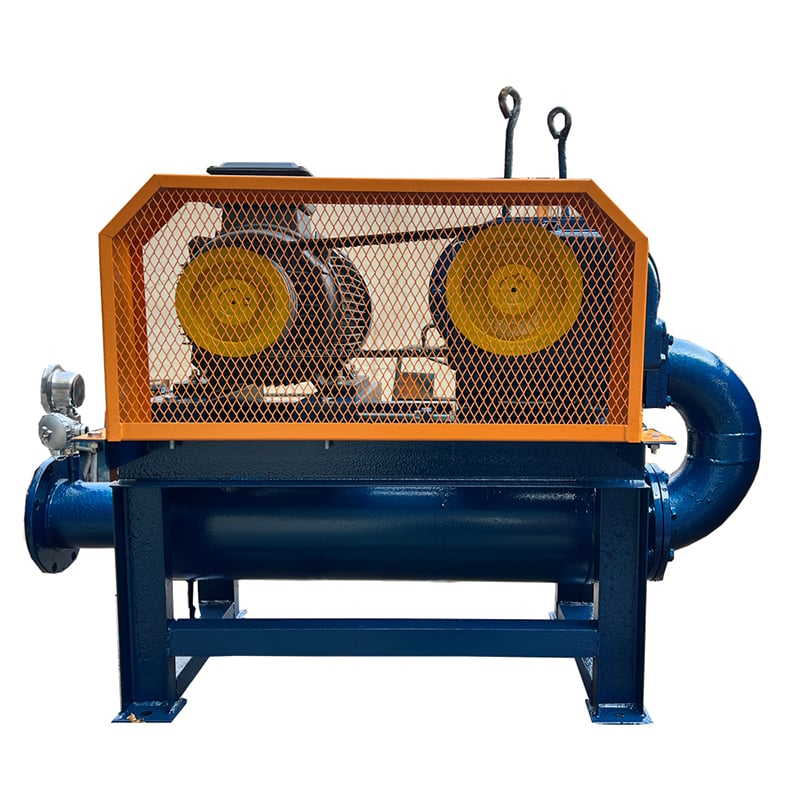
Large scale projects demand equipment that performs consistently under varied conditions and extended operating hours. A roots blower delivers precisely this performance because its design fundamentally differs from centrifugal models. The rotary lobe blower mechanism ensures stable flow rates even when downstream pressure fluctuates, a critical advantage in municipal wastewater treatment, pneumatic conveying, aquaculture aeration, and industrial air compression systems. Understanding why a roots blower excels at scale helps project managers and engineers select the right equipment for complex, long-term operations.
Positive Displacement Blower Applications in Large Scale Operations
Why Positive Displacement Technology Dominates Industrial Projects
Positive displacement blower applications represent the backbone of modern industrial air handling across sectors ranging from environmental treatment to manufacturing logistics. When projects scale, the demand for predictable volumetric output becomes critical. A roots blower maintains its displacement characteristics regardless of system backpressure, making it ideal for applications where centrifugal designs would falter or require expensive variable frequency drive controls. This inherent stability translates directly into lower total cost of ownership and reduced engineering complexity for large scale implementations.
Matching Blower Type to Project Scale
Large scale projects typically involve continuous operation, variable load conditions, and tight performance margins. Positive displacement blower applications excel in these contexts because they deliver constant flow rates with minimal sensitivity to downstream resistance. Whether handling aeration in large treatment lagoons, powering pneumatic conveying systems across extensive distances, or supplying compressed air to distributed networks, a roots blower maintains performance predictability. Industrial air compression systems benefit enormously from this consistency, enabling operators to size equipment accurately and avoid costly oversizing or performance shortfalls.
Rotary Lobe Blower Maintenance and Operational Durability
Simplified Maintenance for Extended Equipment Life
Rotary lobe blower maintenance represents another compelling reason why a roots blower suits large scale projects. The mechanical simplicity of the rotary lobe design—two lobes rotating in opposite directions within a precision housing—results in fewer moving parts and stress concentration points compared to multistage centrifugal impellers. For project managers overseeing continuous operations, this simplicity translates into reduced downtime, lower service costs, and predictable maintenance schedules. Bearing replacement, seal inspection, and oil changes follow straightforward procedures that field technicians can perform efficiently without specialized training or exotic replacement components.
Reliability Under Extended Operating Hours
Large scale industrial operations often demand equipment capable of running 24/7 for months or years without interruption. A roots blower, when properly maintained, delivers exactly this level of durability. Rotary lobe blower maintenance programs typically involve periodic lubrication checks, temperature monitoring, and preventive bearing service rather than continuous performance tuning. This reliability profile makes large scale projects feasible because equipment availability becomes predictable. Industrial air compression systems powering critical processes like wastewater aeration, pneumatic material handling, or combustion air supply cannot tolerate frequent failures, and a roots blower design inherently resists the vibration-induced wear and thermal stress that plague other technologies under continuous duty.
Industrial Air Compression Systems and Project Economics
Total Cost of Ownership Advantages
When evaluating industrial air compression systems for large scale projects, capital expenditure represents only one component of true project economics. A roots blower typically features lower installation complexity than variable-speed compressor systems, simpler control strategies, and more straightforward integration with existing infrastructure. Energy efficiency, measured in kilowatts per cubic meter per minute of delivery, often favors positive displacement designs at the operating points typical of large industrial applications. Additionally, positive displacement blower applications avoid the expensive vibration isolation, complex noise suppression, and precision instrumentation required by some centrifugal alternatives, further improving project-level economics.
Scalability and Modular Expansion
Large scale projects frequently evolve, requiring capacity adjustments or geographic expansion. Positive displacement blower applications, particularly a roots blower, scale elegantly through parallel installation of multiple units. This modularity allows incremental capacity growth without replacing infrastructure. Industrial air compression systems built around roots blower foundations can accommodate future load increases by simply adding additional blower stages or units, preserving earlier investments and enabling phased project rollouts. This scalability advantage becomes increasingly valuable in multi-phase developments, seasonal expansions, or facilities serving growing customer bases, where long-term flexibility directly impacts financial returns.
FAQ
What makes a roots blower more suitable than centrifugal designs for large scale projects?
A roots blower delivers fixed volumetric displacement with each revolution, regardless of downstream pressure changes, ensuring reliable performance across varying operating conditions typical of large scale applications. Centrifugal designs depend on pressure differentials to maintain flow, making them sensitive to system conditions and requiring more complex control systems. For large scale projects requiring consistency, minimal tuning, and extended operational life, the positive displacement characteristics of a roots blower prove decisively advantageous. Additionally, roots blower maintenance demands less intervention than the sophisticated instrumentation and variable drive systems often needed with centrifugal equipment.
How does rotary lobe blower maintenance impact project cost over time?
Rotary lobe blower maintenance involves straightforward procedures—lubrication checks, bearing inspections, seal replacements—that trained field staff can complete with standard tools. This simplicity reduces service labor hours, minimizes spare parts inventory, and lowers preventive maintenance costs compared to equipment requiring specialized technicians or exotic components. For large scale projects running continuously over years, these cumulative maintenance savings significantly reduce total project expenditure. Many industrial air compression systems powered by roots blowers achieve maintenance intervals measured in thousands of operating hours, allowing operators to plan preventive actions efficiently without unexpected downtime surprises.
Can positive displacement blower applications handle varying load conditions in large industrial settings?
Yes, positive displacement blower applications excel under variable load because a roots blower maintains volumetric output regardless of system backpressure within its design range. When downstream demand fluctuates—as occurs in aeration systems with varying flow requirements or pneumatic conveying with intermittent discharge—the blower continues delivering consistent volume without stalling or requiring active adjustment. This inherent stability makes industrial air compression systems featuring roots blowers particularly well-suited to applications where centrifugal designs would require expensive variable frequency drives or complex control instrumentation to maintain performance stability.